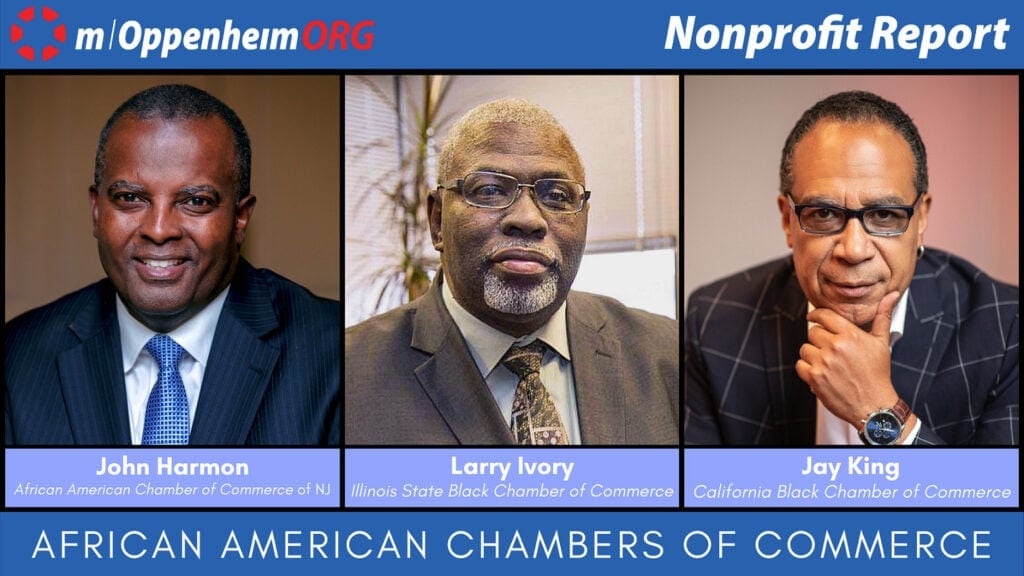
This episode of Nonprofit Report features leaders from Black chambers of commerce across the country who are driving economic empowerment, advocating for inclusive policies, and equipping African American-owned businesses to thrive across the U.S.
Interview by: Mark Oppenheim
Guests:
- John Harmon, President & CEO of The African American Chamber of Commerce of New Jersey, Inc.
- Larry Ivory, President & CEO of Illinois State Black Chamber of Commerce and Chairman of National Black Chamber of Commerce
- Jay King, President & CEO of California Black Chamber of Commerce
Key Points:
- Black businesses face systemic barriers but remain essential to economic equity and national growth.
- Chambers advocate for access to capital, bonding, and contracts through legislative partnerships.
- Financial literacy and investment are critical tools for generational wealth creation.
- Inclusion must be intentional—moving from a culture of exclusion to one of participation.
- Policy change, not party loyalty, is the path to sustainable, structural progress.
- Regional chambers meet hyperlocal needs, while state and national leaders influence broader policy.
- Black entrepreneurship benefits all Americans by strengthening local and national economies.
- Supporting Black businesses is not charity—it is a shared investment in prosperity.
Other Points on African American Chambers of Commerce:
Black chambers of commerce are advancing a bold vision: inclusive capitalism powered by Black entrepreneurship. These leaders know that equity isn’t achieved through statements—it’s built through contracts, capital, and connections.
In New Jersey, chambers secured bipartisan legislation to unlock bonding for public contracts, opening doors that were once shut. In Illinois and nationally, policy and procurement advocacy drive systemic change and ensure Black businesses are positioned to compete.
In California, chambers connect financial literacy, investment, and ownership—helping Black communities build wealth across generations. Whether it’s defending a historic business from eminent domain or opening stock market access, the mission is empowerment.
Ultimately, chambers work so communities can own, invest, and thrive. When Black businesses grow, America grows stronger—economically, culturally, and morally.