How Windmill School supports early childhood development through inquiry-based, play-centered learning. The discussion highlights the school’s 60-year evolution, its unique outdoor learning environment, and its commitment to supporting the whole child through strong partnerships among educators, families, and community.
Interview by: Mark Oppenheim
Guests:
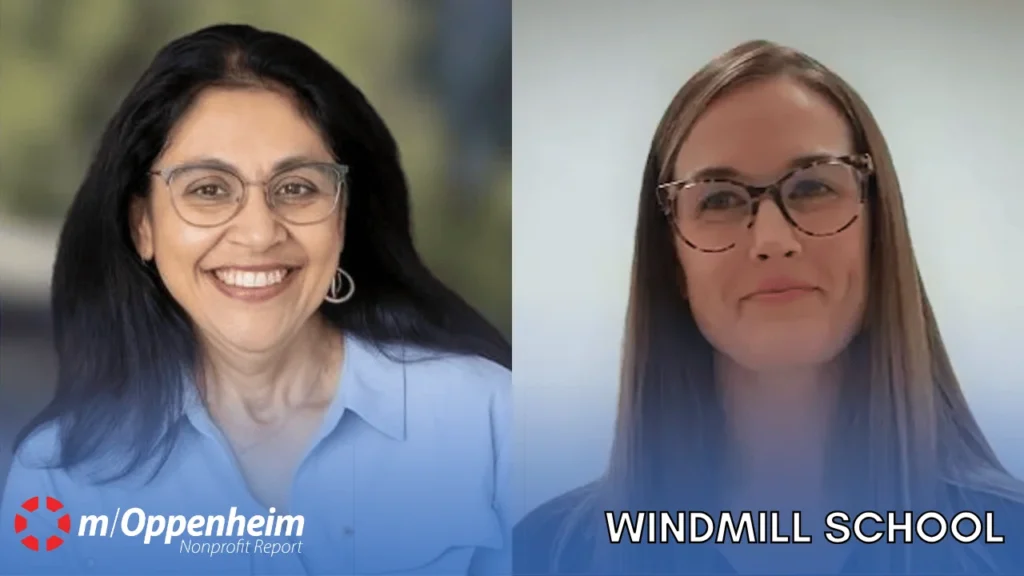
- Sue Krishna, Executive Director, Windmill School
- Jessica Mackall, Director of Education, Windmill School
Key Points:
- Windmill School has over 60 years of history, evolving from a one-room schoolhouse to a permanent two-acre campus with extensive indoor and outdoor learning spaces.
- The school is grounded in play-based, inquiry-driven learning that merges curiosity with intentional developmental milestones.
- Teachers act as co-learners, observing and documenting children’s interests to guide curriculum.
- Children develop foundational skills—social, emotional, cognitive, and motor—through exploration rather than top-down instruction.
- Inquiry emerges from children’s questions, with teachers expanding learning through prompts, materials, and multi-sensory experiences.
- Cultural context and home-to-school connections are essential; families, teachers, and the environment form a triad that centers the child.
- Programs include toddler-and-caregiver classes, twos programs, and mixed-age classrooms.
- Social-emotional learning is emphasized across all age groups as a key building block.
- Community and belonging are intentionally cultivated among children and families, supporting long-term relationships.
- Windmill School prioritizes quality and community impact over expansion, maintaining a mission-driven, local focus.
Other Points on the Windmill School:
Windmill’s inquiry-based curriculum relies on observation, documentation, and reflection, allowing teachers to meet each child where they are developmentally. This approach supports autonomy, creativity, and problem-solving from an early age.
Family partnerships are central to learning. By understanding each child’s cultural and personal background, educators create environments that honor identity and build trust. This alignment strengthens the child’s sense of belonging.
The school’s programs support children at different stages of development, from toddlers beginning to navigate group settings to older children developing collaborative and social-emotional skills. Consistency of care and environment helps children build confidence and connection.
Windmill’s commitment to community extends beyond preschool years through the Laurel Education Center, reinforcing that their role is not to scale broadly but to deepen quality and relationships within their local community.