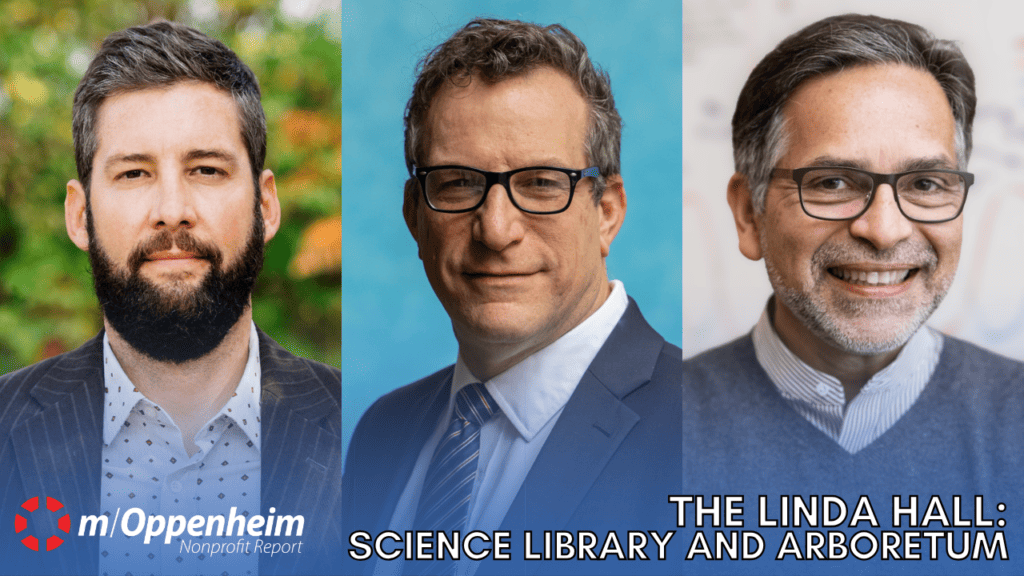
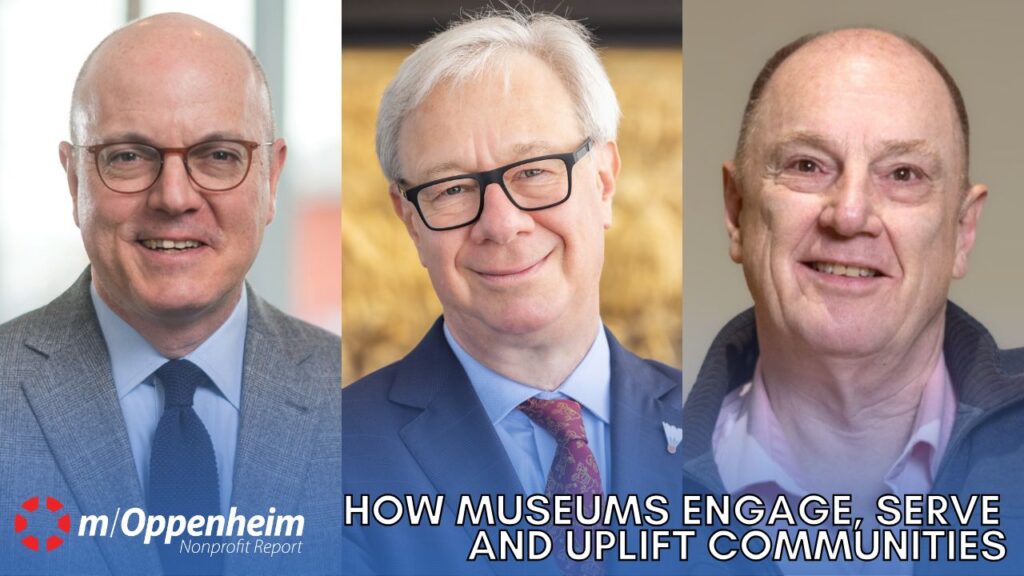
This episode of the Nonprofit Report features Eric Dorfman, PhD, President & CEO of The Linda Hall; Jacob Campbell, PhD, SVP of Research and Collections; and Alejandro Sánchez Alvarado, PhD, Board Member of The Linda Hall and President & Chief Scientific Officer of the Stowers Institute for Medical Research. The conversation explores how The Linda Hall is evolving beyond a traditional research library to connect people with science, knowledge, collections, and in-person experiences.
Interview by: Mark Oppenheim
Guests:
- Eric Dorfman, PhD, President & CEO
- Jacob Campbell, PhD, SVP of Research and Collections
- Alejandro Sánchez Alvarado, PhD, Board Member of The Linda Hall; President & Chief Scientific Officer, Stowers Institute for Medical Research
Key Points
- The Linda Hall is one of the world’s largest independent science research libraries and is approaching its 80-year anniversary.
- The organization is developing a future-facing model that connects the public to the process of science and scientific research.
- Its collections and programming provide opportunities to explore science, knowledge, research, art, and the natural world.
- The organization sees physical collections and in-person experiences as increasingly important in an environment where digital and synthetic information can be difficult to verify.
- The Linda Hall is exploring ways to make research participatory and accessible to visitors, including community science and opportunities to observe scientific processes.
Other Points on The Linda Hall
The Linda Hall’s history provides a foundation for its evolving role in science and public engagement. Founded following a gift in 1938, the organization developed as a science resource for Kansas City’s growing institutions and now operates on a 14-acre campus surrounded by an urban arboretum. The site brings together its library, collections, exhibitions, and natural environment.
A major focus of the discussion was connecting the public with the process of science rather than simply presenting scientific information. Jacob Campbell described the organization’s exhibition program and research efforts as opportunities to help people better understand how science works. Eric Dorfman characterized this as a shift toward a future-facing model that connects society to knowledge.
The guests also discussed the relationship between physical and digital information. Alejandro Sánchez Alvarado emphasized the difficulty of establishing the provenance of information in a digital environment, while physical collections can provide tangible connections to original materials. This creates an opportunity for institutions like The Linda Hall to help people think critically about evidence, knowledge, and trust.
Looking ahead, The Linda Hall is exploring ways for visitors to become more directly involved with scientific discovery. Plans include participatory research, community science, and opportunities for people to observe processes such as collecting and preserving plant specimens. The organization also sees potential in bringing science, art, and community engagement together to create new ways for people to understand and interact with knowledge.